



The 2026 Growth Formula: Why Staten Island E-Commerce Brands Are Pairing Shopify SEO with AI PPC
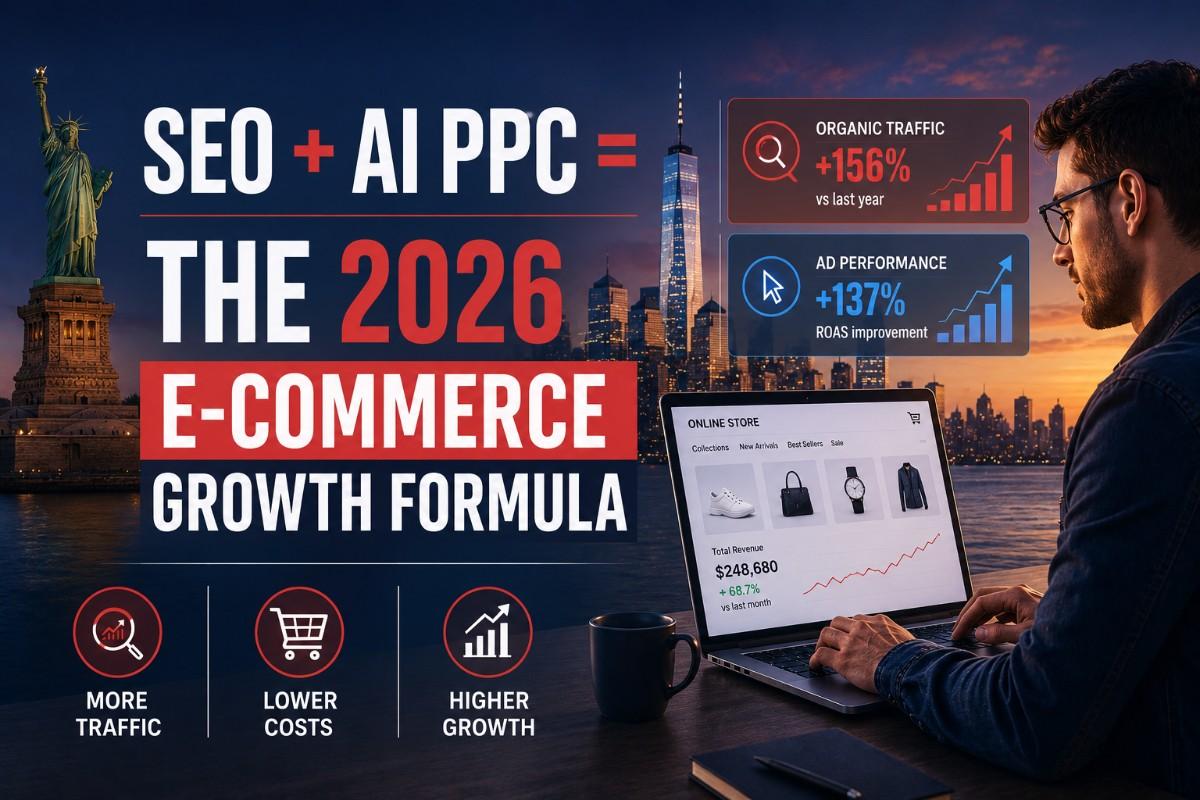
Staten Island e-commerce brands are scaling rapidly in 2026 by combining Shopify SEO with AI-driven paid acquisition to counter soaring customer acquisition costs. Recent retail data indicates that synchronizing organic search optimization with machine-learning ad platforms lowers acquisition costs by up to 32%, establishing this unified framework as the definitive blueprint for sustainable digital growth in New York's competitive digital marketplace.
Why Are Staten Island E-Commerce Brands Moving Beyond Traditional Digital Marketing in 2026?
If you sit down with an online store owner anywhere from the North Shore over to Tottenville, you will hear the exact same headache: old-school digital advertising just does not cut it anymore. Years back, you could throw up a basic campaign, check your keyword list once a week, tweak a few bids manually, and bring in a decent return. But in the current New York market, that slow, hands-on approach will cause a business to burn through capital. Small local shops are getting completely boxed out by massive national brands that use instantaneous automated systems to capture customers before a human manager can even look at a daily report.
Because of this constant pressure, a quiet shift is happening among Richmond County merchants. Running isolated marketing channels—where your website's organic improvements have zero connection to your paid search campaigns—leads to major data blind spots and a fragmented user experience. Local business owners are waking up to the fact that they cannot afford to run their marketing in silos. They need a flexible system where paid data and organic visibility instantly pick up on local consumer shifts and work together to win the click.
How Are Rising Advertising Costs Affecting Staten Island Online Businesses?
The financial math behind keeping an online shop afloat in New York has become a massive stress test as major ad networks continue to jack up their prices. When cost-per-click rates tick upward, profit margins vanish instantly, turning a slightly off ad campaign into a genuine business emergency. Sticking with manual media buying on these big ad networks feels a lot like burning cash; a person sitting at a desk simply cannot pivot fast enough to compete with localized demand spikes or changing regional bidding environments.
According to a benchmark performance study published by Shopify: The average customer acquisition cost (CAC) for digital retailers increased by over 24% year-over-year, forcing independent merchants to maximize the efficiency of every single dollar dedicated to paid media.
When a local shop tries to absorb these rising ad costs without updating its technical infrastructure, it runs out of the free cash needed to restock inventory, hire local talent, or design new products. For a boutique fashion brand packaging boxes in New Dorp or a specialty food brand operating out of West Shore, a 24% spike in acquisition costs can wipe out their entire bottom line for the year. This steep uphill battle is driving local companies to move away from old-fashioned campaign setups and adopt smart tools that instantly flag and kill underperforming ad placements.
How Does Shopify SEO Help Staten Island Online Stores Generate Consistent Organic Traffic?
Leaning exclusively on paid ads is a risky strategy because the very second your daily budget runs out, your pipeline of new customers dries up completely. This is exactly why savvy independent brands use organic search as a reliable financial shock absorber. Building a solid foundation on a platform like Shopify means taking the time to structure logical collection categories, clean up internal link webs, and inject proper product schemas into your backend code. This foundational work ensures that traditional search engines and conversational AI systems can easily scan your site and list your items right when someone is looking to buy.
The real difference-maker for independent retailers lies in dominating highly specific, intent-driven phrases. When a local company optimizes its store pages for targeted combinations like Shopify SEO AI PPC Staten Island ecommerce, it lands squarely in front of buyers at the exact moment they are looking for specialized inventory. This steady, reliable stream of free organic clicks keeps the cash flowing, keeping businesses safe from the wild price swings of the paid ad market.
Why Is AI PPC Becoming Essential for E-Commerce Growth in New York?
Human digital managers are running into a wall because no one can manually analyze and adjust individual keyword bids for hundreds of items twenty-four hours a day. Partnering with a skilled AI marketing agency New York flips the script by handling that deep analytical lifting through machine learning. These smart software models track thousands of concurrent online signals, using that data to automatically shift ad budgets, test visual creatives, and isolate high-value buyer groups on the fly.
Using advanced AI PPC management New York configurations gives smaller, family-owned operations the raw analytical power to go toe-to-toe with corporate retail giants. These automated frameworks read conversion feedback loops instantaneously, allowing merchants across Staten Island to spot hyper-local buying habits, cut their cost-per-click, and squeeze every bit of value out of their daily budgets. It gives you a lean, incredibly responsive ad setup that works around the clock to secure the most profitable sales.
Can Shopify SEO and AI PPC Work Better Together Than Separately?
When you keep your organic SEO and your paid ad accounts completely separated, you throw away incredibly useful consumer data. Uniting these two practices creates a powerful feedback loop where each side strengthens the other. The fast-moving search trends and keyword wins discovered by your algorithmic ad campaigns can be handed right over to your content team, showing them exactly how to optimize your Shopify site structure without months of slow, manual testing. At the same time, holding top spots in both organic and paid spaces means you command double the screen space.
This dual strategy hits rising acquisition costs right where it hurts. Dominating organic search naturally builds up your site's perceived authority, and that trust factor can actually lower the cost-per-click rates on your active paid campaigns. By bridging the gap between paid and organic channels, independent businesses build a cohesive visibility engine that secures a larger piece of the New York consumer market.
What Results Are Local Brands Seeing From AI-Driven Advertising Campaigns?
Store owners across New York who have ditched old-school manual management are seeing massive improvements in both daily productivity and raw profit margins. Removing human delays from campaign optimization allows modern ad platforms to deliver incredibly relevant, personalized ad variations directly to specific neighborhoods and demographics across the city.
According to research compiled by McKinsey: Organizations that integrate advanced AI analytics into their core consumer-facing marketing workflows experience an average 15% to 20% increase in total marketing return on investment.
The clear breakdown between legacy manual practices and these modern automated frameworks is highly apparent when checking text patterns and diagnostic software tools. For example, as illustrated in the system evaluation screen visible in image_5117a4.png, analyzing textual metrics and underlying operational data highlights where old, rigid methods fall flat compared to dynamic setups. Local brands see this technical shift directly in their bank accounts; machine-learning algorithms identify and shut down failing ad sets before they drain your funds, letting you funnel that cash into top-performing terms so you can out-maneuver larger corporate competitors.
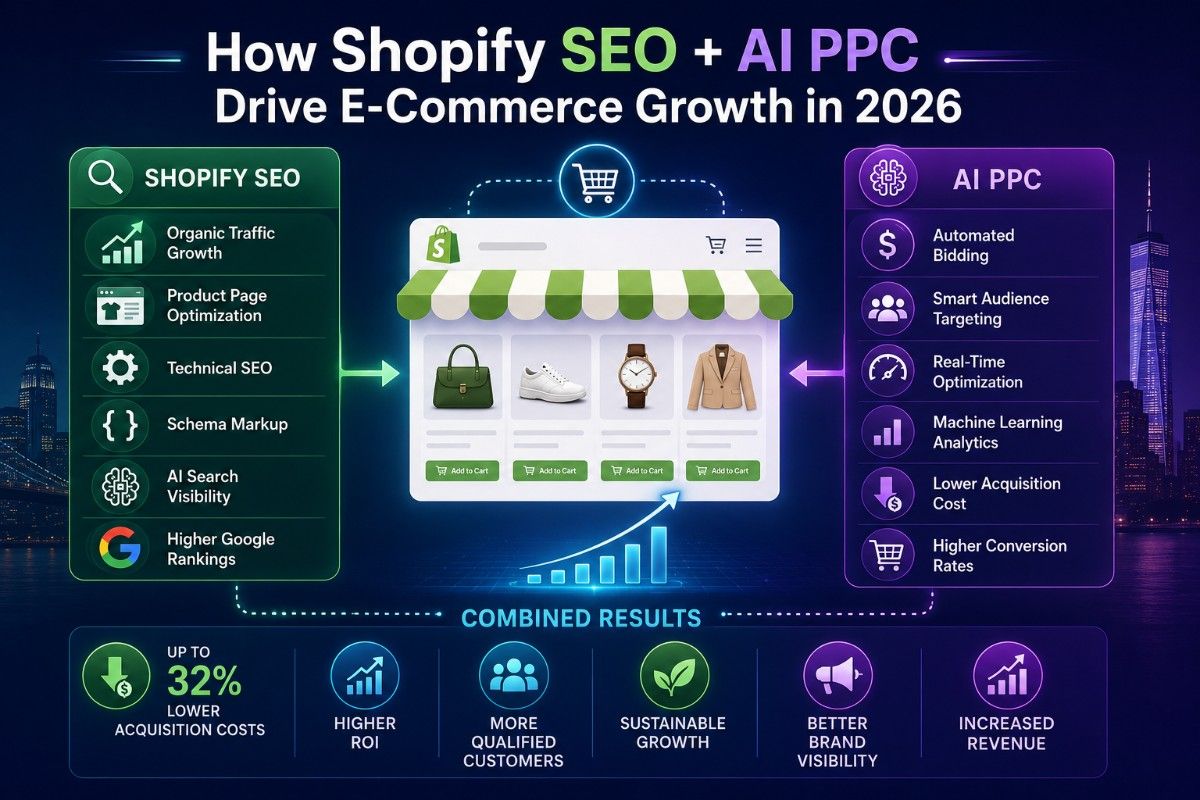
Why Are Affordable AI Marketing Solutions Becoming Popular Among Smaller E-Commerce Brands?
For a long time, high-level predictive ad technology was a luxury that only enterprise companies with massive budgets could afford. Today, accessible automated services are completely changing that narrative. Small business owners do not need to hire an internal team of developers or spend a fortune to run smart, predictive campaigns. Turnkey boutique agencies now provide advanced marketing software at price points that growing storefronts can actually afford without risking their financial stability.
This democratization means a small retail startup operating out of St. George or Clifton can leverage the exact same data insights as an international brand. By removing the steep financial barrier to entry, these budget-friendly automated programs ensure that independent companies can protect their search rankings, optimize their checkout pipelines, and build sustainable storefronts designed to last.
Why Are Staten Island Brands Choosing Zebra Techies Solution for AI-Powered Growth?
Local businesses determined to clean up their search presence and optimize their paid ads are teaming up with Zebra Techies Solution (ZTS) to run their digital growth strategies. Backed by more than 15 years of hands-on experience and a solid track record of over 10,000 completed projects, ZTS brings deep regional knowledge to New York's competitive business environment. Their team features over 100 in-house AI engineers who specialize entirely in building high-yield marketing systems that protect retail margins.
ZTS provides a complete lineup of automated growth services built from the ground up for online retail, covering advanced organic search strategies, automated media buying, and real-time conversion optimization. Their practical packages give growing companies access to enterprise-level marketing tech at rates that make sense for their budgets:
- AI Digital Marketing & Visibility Optimization: Full-scale strategies designed to capture ready-to-buy shoppers across both traditional search and conversational AI answer engines.
- AI PPC & Paid Media Management: Smart, algorithmic bidding setups built to spot and eliminate ad spend waste before it hurts your bottom line.
- AI SEO & Content Architecture: High-level semantic optimization to make your Shopify catalog incredibly clean and readable for search platforms.
- AI Social Media Marketing: Automated social ad management and smart targeting tools to turn casual social scrolling into steady e-commerce sales.
ZTS keeps things highly affordable for local shops, offering entry-level AI ecommerce marketing Staten Island NYC campaigns starting at $149 a month. For brands looking to scale up their client acquisition quickly, their specialized AI Lead Generation tracks start at $1,000 a month and include a contractual guarantee of 1,000 qualified leads per year on eligible plans.
With clients spanning across Manhattan, Brooklyn, Queens, the Bronx, Staten Island, and Long Island, Zebra Techies Solution gives New York companies direct access to local professionals who understand the regional market. Retailers ready to upgrade their growth engines can chat directly with their strategy team on their NYC hub page at https://zebratechies.com/ai-lead-marketing-nyc or use their main contact lines:
- USA Corporate Line: +1 (213) 233-1633
- India Operations Hub: +91-8910802928
- Direct Support Email: support@zebratechies.com
Frequently Asked Questions
Is Shopify still good for e-commerce in 2026?
Yes, Shopify is still the go-to choice for digital retail because its core code plays perfectly with modern machine-learning marketing software, complex schema structures, and fast backend data links. This setup makes sure your products show up cleanly in traditional searches, voice commands, and conversational AI answers.
How much should a Staten Island business spend on AI PPC?
Every niche is a little different, but most independent online brands start with an advertising budget of $1,000 to $3,000 a month. This gives the automated system enough conversion data to optimize its bidding rules and accurately pin down your ideal local buyers.
Can SEO reduce advertising costs over time?
Yes, a strong organic search footprint directly lowers what you have to spend on paid ads over time. When your site ranks naturally for top industry terms, you bring in a reliable flow of free traffic, which lifts your overall domain quality scores and lowers your average cost-per-click on ad networks.
What does an AI marketing agency do?
An advanced agency replaces slow, manual campaign tweaks with automated machine-learning models. They handle constant bid adjustments, test variations of ad text, optimize product images, and clean up website code to bring in maximum revenue without human delays.
How long does Shopify SEO take to show results?
While clearing up basic technical code errors can trigger a nice traffic bump in just a few weeks, a full organic strategy typically takes three to six months to really hit its stride. This window gives search engines enough time to crawl your updates, index new items, and measure customer interactions.
Is AI PPC better than traditional Google Ads management?
Yes, automated ad tracking easily beats old manual campaign setups because it evaluates thousands of real-time market signals simultaneously. It shifts your keyword bids instantly based on the searcher's precise location, time of day, and immediate intent, protecting you from wasted ad spend.
Conclusion
Tying together structured website optimization and machine-learning paid media is no longer optional—it is a fundamental shift in how online brands have to handle customer acquisition. For Staten Island store owners, holding onto old, manual marketing methods is a straight path to inflated acquisition costs and wasted budgets. Moving to an integrated framework allows local companies to build a resilient growth model by pairing the long-term, compounding returns of organic search with the quick, data-driven sales power of automated ads. To win out in New York's fast-moving retail space, business owners need to take a hard look at their current marketing setup, connect the dots between their paid and organic strategies, and use automated tools to lock in their long-term profits.

By Professional qualification a Computer Engineer, By Profession an Online Marketing Strategist and Web Application Development Expert, By Industry position working as a CEO at Zebra Techies Solution!